
←
All posts Summer 2026 Newsletter
Contents
- Stephen King - The Trust’s New Chairman
- Driffield Agricultural Society’s 150th Show
- Other Country Shows Coming Up
- The Step Into The Story Project
- Rural Land Under Pressure
- The New East Riding Local Plan
- What is it?
- The Wold Rangers’ Way
- Looking forward Already to 2027
- A Morning at the Racing Stables
Stephen King - The Trust’s New Chairman
A new Chairman was elected at a recent meeting of the Trustees who needs little introduction to members as he has been the Vice-Chairman for many years, but may not be quite so well-known out of the organisation.
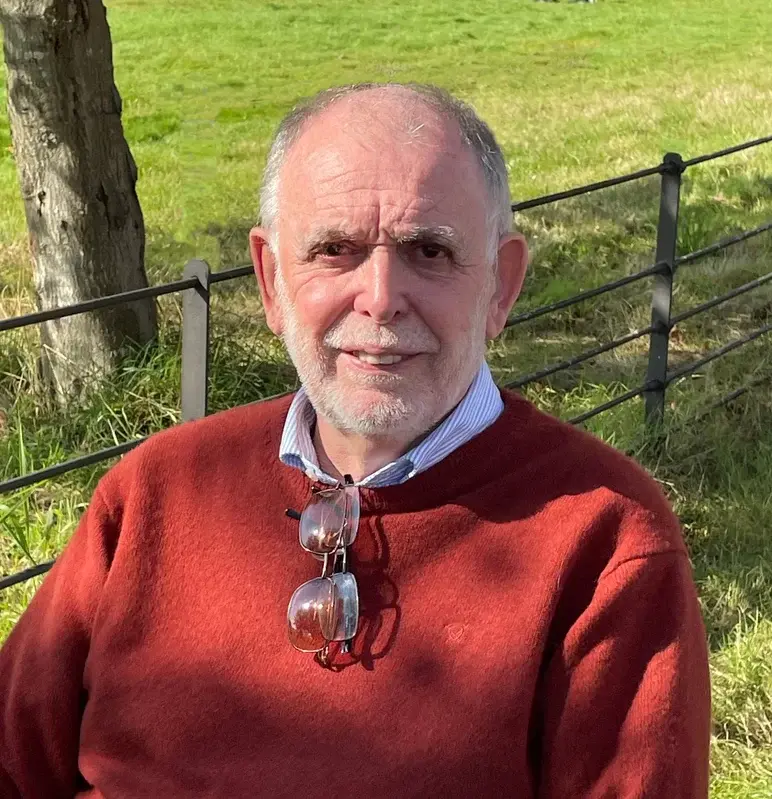
Steve King qualified from Hull University BA(Hons)(Geography) and has spent his working life as a professional soil scientist working as the Soil Survey of England’s senior research scientist for the North of England.
If Market Weighton was a town in Europe, Steve’s effigy would be carved in stone at the front of a dignified civic building, having served his local community in many different ways - not least as Town Mayor for a record seventeen times.
He brings to his new position years of fieldwork out on farms in the Wolds, years of local community work and years of honing his communication skills at a time when the long established largely agrarian landscape of the Yorkshire Wolds is under great pressure from all sorts of conflicting demands.
Driffield Agricultural Society’s 150th Show
The Society is celebrating its 150th staging of the Driffield Show this year so readers might be interested in some facts about the society and its origins.
Innovators like Jethro Tull from Berkshire, developer of a horse drawn seed drill and ‘Turnip’ Townshend who introduced the Norfolk four course rotation of crops in the early 1700s may not mean much to you unless you had an enthusiastic history teacher with a leaning towards farming when you were at school, who may even have bored you to death with the Corn Laws of the early 1800s – Parliament imposing tariffs on cheap foreign imports to protect home producers. Does that sound familiar? The tariffs on food, coupled with the Irish potato famine, led to severe hardship and mass emigration and were repealed in 1845 to avoid starvation and urban unrest.
Contrary to some expectations this freeing up of international markets actually encouraged the agricultural revolution and the Victorian era of ‘high farming’ of the mid 1800s with farmer discussion groups spreading all around the country to learn about novel ideas for more efficient methods of production. The Driffield Farmers’ Club was formed in 1851. The following year they carried out experiments with new machinery in fields at Kelleythorpe.
They ambitiously changed the name to the Driffield and East Riding Agricultural Society in 1853 and held their first annual exhibition of farm stock and implements in 1854 in local farmers’ fields, as many small shows around the country still do, but after 100 years, in 1954, the society purchased a permanent 35-acre home at Kelleythorpe. This has been extended over the years with purchases and renting of further land to provide the present permanent 77 acre showground site that you see today, benefitting from continued improvements to its facilities, numerous hard roadways and a range of permanent covered spaces and extensive open areas for temporary exhibits: the members’ wooden buildings (moved from the former Catwick air base) and the new ‘Rix Pavillion’ provide multi-use event space so that the site can be used for many different types of occasion, even weddings, apparently.
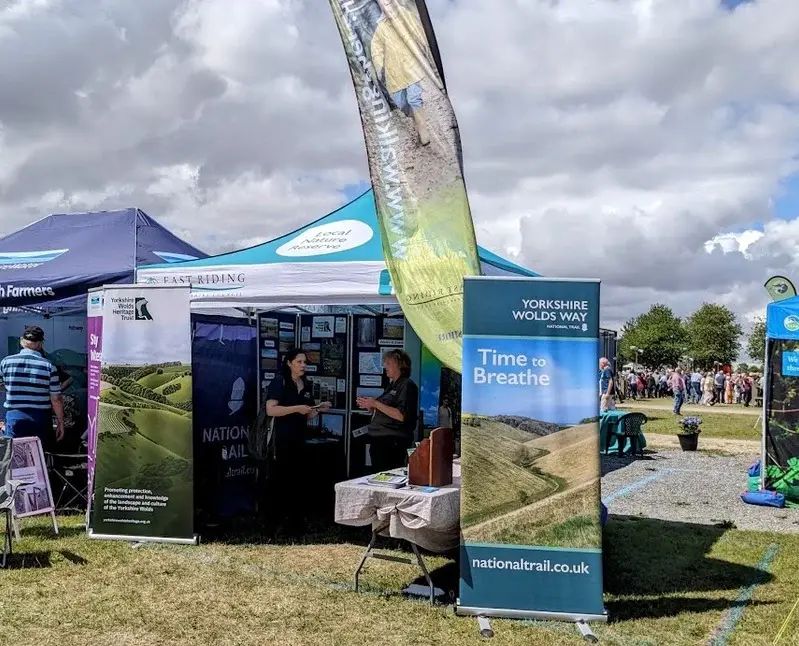
The Trust is very grateful to the East Riding’s Footpaths Department for sharing their tent for the last two years.
In liaison with the local authority, after the Covid restrictions were lifted, in 2021 and 2022 the show switched to a two day event in order to keep visitors thin on the ground. It has since switched back to its customary one day format and is one of the country’s biggest one day agricultural shows, with over 400 trade stands, lifestyle stalls, and rural craft exhibitions. It averages around 25,000 visitors each year.
If you have never been, what is there to see? Talks, demonstrations, impeccably turned out livestock, the latest developments in equipment and techniques like autonomous field work, even drones for spotting and treating small areas of crop deficiency, traditional skills from sheep shearing to flower arranging, dog handling to craftwork. Really something for everyone. The highlight for many will probably be Ben Atkinson and his team in the main ring to enthral the crowd with their impossible feats of horsemanship. The Atkinson family from Howden have been providing highly trained horses and stunt riders for film and TV, public displays and private functions for thirty years.
And if you happen to pass the Yorkshire Wolds Heritage Trust tent, do call in and have a chat. We may not be able to change the World, but we’d like to know what you like and, possibly, don’t like about the Wolds. Look out for the Trust’s own new GREEN tent this year at C48 in the Agriculture Section. The hot topic for this year might be the designation of part of the Wolds as a National Landscape Area, long overdue and not extensive enough to judge by most people’s comments last year, and very worryingly this year, the question of development (see more about that item elsewhere in this newsletter).
Other Country Shows Coming Up
We are in the middle of the summer show season. It is unfortunate that the very popular Malton Show is not being held this year and we hope that it will return to Scamston Hall to the North of our area, next year, but here are some others for you to consider:
18th July Bishop Wilton
22nd July Driffield
28th July Rydale Show at Duncombe Park
29th July Bilsdale Show
5th August Thornton-le-Dale Show
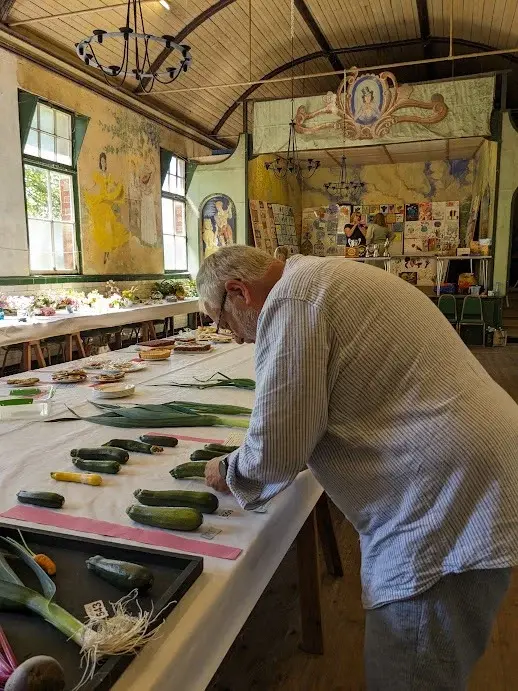
Judging produce in the historic Concert Hall at last year’s Londesborough Produce Show
Summer Farming Commentary
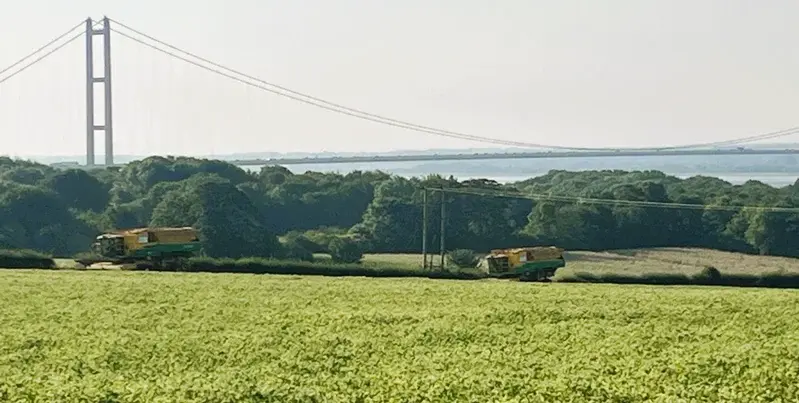
As I write this early in July harvest of cereals has already started. The vining pea harvest is in full operation with a 24/7 challenge of producing a top-quality product in unfavourably hot weather. The picture shows The Green Pea Company (purple group) working their way north having started the season in Lincolnshire.
Rainfall from mid-March to the end of June was 62% of the long-term average. A major benefit of the Wolds chalk is the ability of the plant roots to penetrate deeper than soils over hard rock such as the Cotswolds enabling more available water.
I will not dwell on the weather as it could feature in every report! One fact.
On the farm we have conducted a range of conservation work over many years. A range of schemes has supported the work: Countryside Stewardship, Entry Level Scheme, Woodland planting and more recently Sustainable Farm Incentive. A substantial proportion of these schemes, including ours, are ending with limited replacement in place. This continues the lack of medium-term direction from DEFRA. All these schemes support the work and investment we put into the biodiversity, productivity, and soil health of our farms.
This coincides with rise in all costs, not just agriculture I appreciate, and the elimination of the Basic Payment Scheme in England.
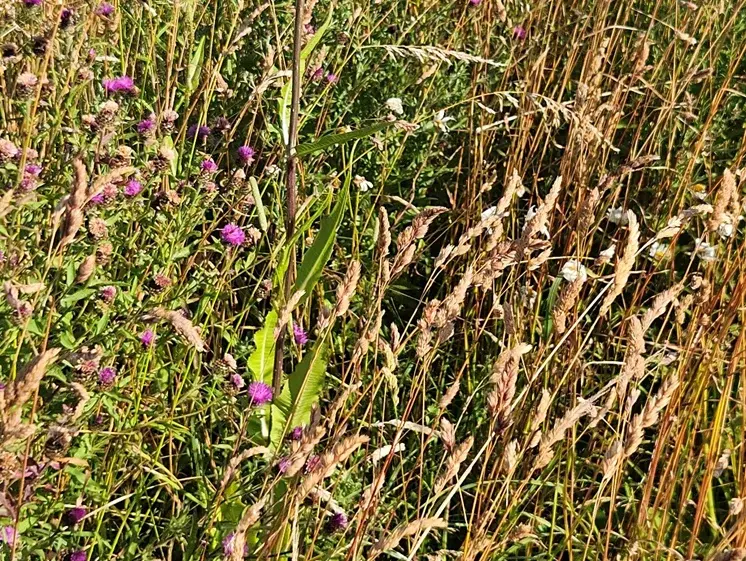
On a positive note, the swallows are having a successful breeding season, butterflies are plentiful & areas planted with pollen & nectar mixes are full of insect activity. On the farm there are no natural watercourses. However, in dry years the man-made pond close to the farm is invaluable for the wildlife. The hedges and field margins (scheme assisted) provide valuable cover at this time of year.
We hope for a successful harvest!
Harvest time, kindly contributed by Paul Heywood of Cold Harbour Farm, Bishop Burton.
The Step Into The Story Project
You may know Goodmanham because of the excellent Goodmanham Arms, but did you know that it was once the centre of one of the most important historical events that took place in the North of England?
Possibly because of all the natural springs in the village and its favourable location, the Anglo-Saxons built their High Shrine to Woden here.
Like any invader, they brought their religion with them and Goodmanham became a key centre of Pagan worship for what was then Northumbria.
However, in AD627 King Edwin, who had married the Kentish Christian Princess Ethelburg, eventually decided that Christianity was the way forward. King Edwin ordered Coifi, his High Priest, to destroy the Temple and with trepidation Coifi borrowed King Edwin’s stallion and spear and rode from their Summer Palace in Londesborough to Goodmanham and set about destroying the Shrine.
King Edwin’s conversion to Christianity marks one of the most significant cultural turning points in early English history. With Christianity, came new political and cultural alliances. Centres of scholarship were built and a move from oral traditions to the written word began, taking us out of the Dark Ages.
Pope Gregory ordered King Edwin to build a church on the site of the destroyed Temple. This would have been a wooden church and the forerunner to the current stone church of All Hallows in Goodmanham. King Edwin granted land for York Minster to be built; again, a wooden church was built, and on Easter Day in AD627, King Edwin and his Council were baptised by St Paulinus.
Next year marks 1400 years since these momentous events took place, and the villages of Londesborough and Goodmanham have planned a year of commemoration and celebration. Events include the creation of a community textile art, which tells the story of these events as told by The Venerable Bede. There will also be exhibitions and talks by authors and historians and the highlight of the year will be a Pilgrimage from Londesborough to Goodmanham on 5th June 2027. The Pilgrimage will include theatrical and musical interventions along the route, produced by this year’s York Mystery Plays Pageant Master Alan Heaven and Haigha, an Anglo-Saxon theatre group.
The Yorkshire Wolds Heritage Trust is pleased to support this commemoration and has awarded a grant towards the costs of the programme.
To find out more about the events for next year you can follow the “Step into the Story” project by following their Instagram and Facebook pages @ad627yorkshirewolds. The programme and how to book for the events will be shared soon.

Kindly contributed by Susan Fisher of Goodmanham
Rural Land Under Pressure
The two local authorities covering the Wolds recognised the collective knowledge of the Yorkshire Wolds Heritage Trust early on and sent staff representatives to committee meetings. It became a statutory consultee for planning and other environmental matters and contributed in the formulation of many Council guidance documents.
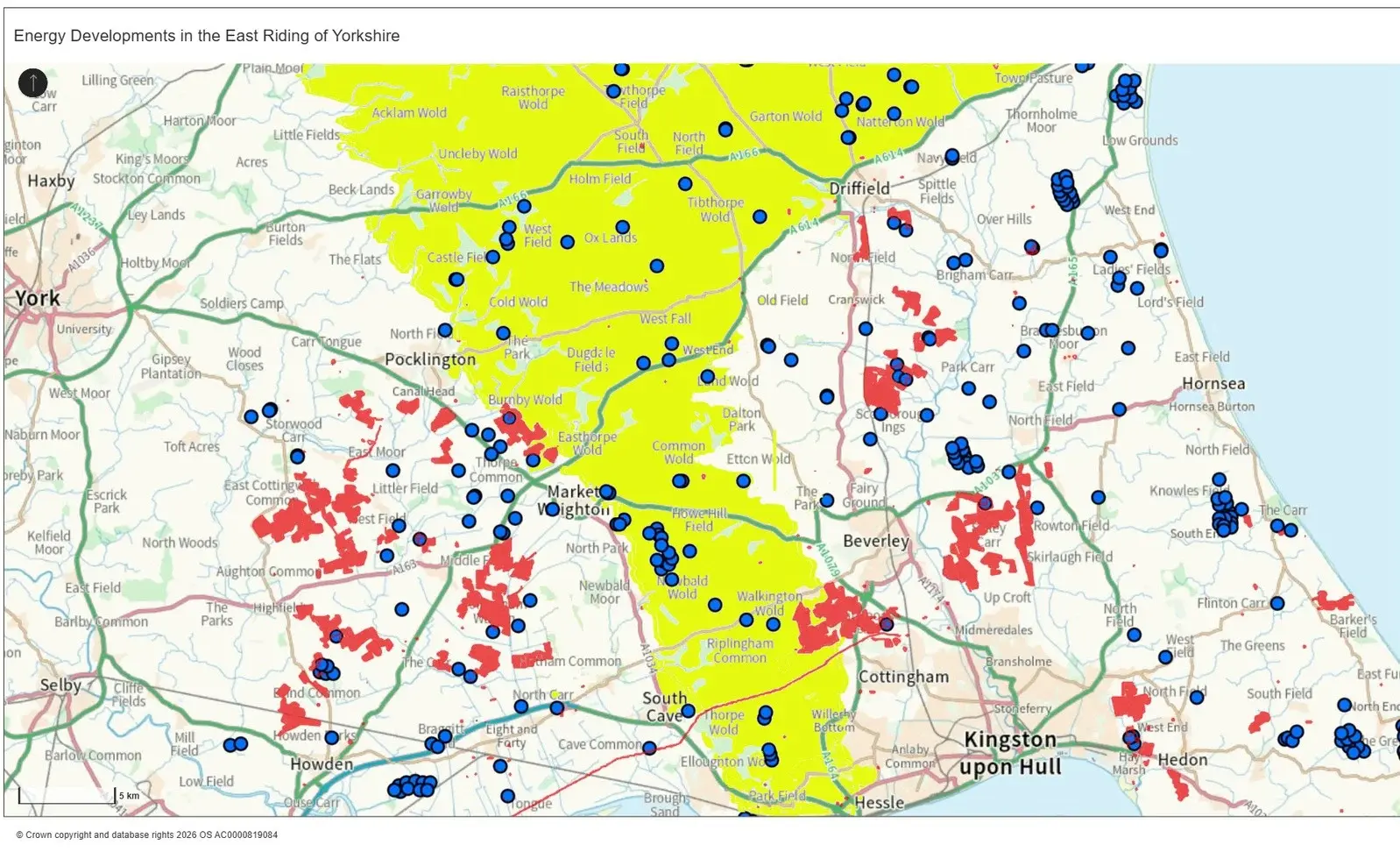
Over the years the Trust has supported three suggestions to the predecessor of the government body ‘Natural England’ to consider the Yorkshire Wolds for designation as an Area of Outstanding Natural Beauty (AONB) like the neighbouring Howardian Hills and the Lincolnshire Wolds. ‘National Landscape’ the new name for AONBs has finally been agreed for part of the Yorkshire Wolds and the hope is that in time the boundaries of the new National Landscape area will be extended to include more very beautiful parts of the Wolds chalkland as shown in lime green in the map below.
You can’t fail to have noticed that there is a serious problem at the moment – space. When it comes to space for a growing population and everything that goes with improved amenities, redevelopment of obsolete sites is always suggested, but that is not easy – wrong size, wrong place, contaminated ground etc, and there isn’t enough anyway. So rural land is taken up. There are already many pressures on rural land. The first and, historically, the most important is food production. For a country reliant on 40% imported food, and supply clearly not as reliable as it was before the recent Middle-East hostilities, removing thousands of acres of farmland from food production each year seems counter intuitive and short sighted. Do you know how many loaves of bread you can make from one acre of land? 4,250 800gm loaves. That would keep the average family happy for roughly fifty years.
You will have seen for yourself in your outings around the Wolds or from local news the many and varied demands for the provision of space: space for solar and wind farms, battery storage, underground fractionation for gas, the creation of the ‘Northern Forest’, re-wilding farmland, golf courses, housing, work units, schools, sports fields and all the extra over- and under- ground infrastructure for the growing local populations while still producing food and maintaining an attractive countryside. The map below from the East Riding Planning Department shows just two of the demands: solar farms in red and wind turbines in blue circles. It would be quite interesting to see a map with all the other features mentioned above. These demands are more pressing to all of us now than they were when the Trust was started by a retired school mistress, a few Hull academics and likeminded individuals thirty-five years ago. The Trust has a vital role in contributing important, reliable and relevant local information that the decision makers need in order to safeguard properly the future of this cherished area.
Watch David Davis MP in Parliament on: https://www.youtube.com/watch?v=iGMv58sKVJk
The New East Riding Local Plan
The East Riding Local Plan guides development in our area. The council adopted the last Local Plan Update in April 2025 which dictates housing, jobs, and land use up to 2039.
Any readers who have a reason for contributing to the planning process such as town and parish councillors, developers or people who could be affected by development should be aware of this ‘speeded up’ New Local Plan to replace the 2025 version.
A 30-month timeframe to cover the next five years begins after the publication of a notice and timetable and the carrying out of a scoping consultation to gather some early views to inform the preparation of the new plan, and a self-assessment summary on or before 31st October 2026.
We are already in the first stage, so you do need to make your views known to the planning department as soon as possible. Your essential information is downloadable from the East Riding of Yorkshire Council website. The same is happening in N. Yorks, if you are in the N. Yorks area.
What is it?
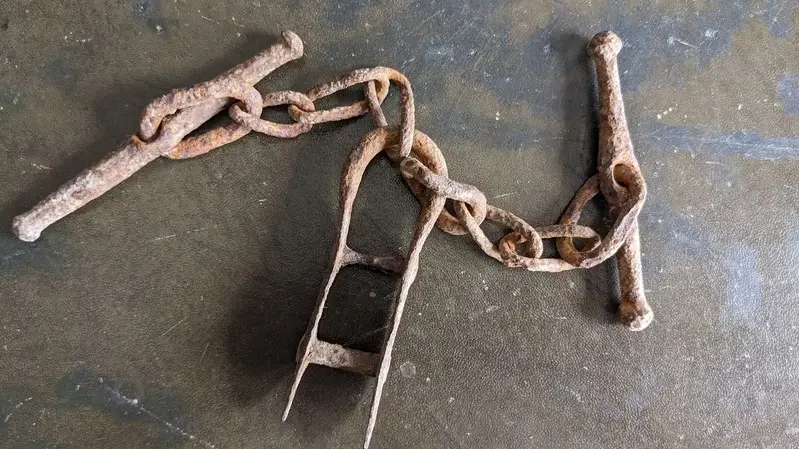
Dug up in a Sancton garden. Guesses to our Admin Officer for a small prize to the first correct answer.
The Wold Rangers’ Way
Do you remember Margaret Dibb our remarkable old member? Passionate about the Wolds, she left the Trust a generous bequest in her will. It meant that the Trust has been able to provide small grants for worthwhile proposals aligned with its charitable aims. This has proved to be a very rewarding new function for the Trustees and they have had many worthy submissions since the scheme began. To date the Trust has committed over £90,000 to worthy projects. When Mark Blakestone’s group submitted their application for a grant towards the cost of new Wold Rangers’ Way signage and benches on rights of way to the West of Driffield, the YWHT trustees knew immediately that it was exactly the sort of project that should be supported. It showed how enterprising local people familiar with their area could research known stories, to put together something important about their locality that hadn’t been there before with enthusiasm, energy and humour. Their maps and book are already available and being used by walkers whether out for a short breath of fresh air or a serious hike. The Trust is pleased to have contributed to these new high quality featurers which will certainly increase the knowledge and enjoyment of this part of the Wolds for all. Importantly, being made of robust materials (painted galvanised steel concreted into the ground), it is hoped that the boards will survive for many years as what are sometimes called ‘silent teachers’, that is, something that may cause passers-by to pause and think, and proceed with a little more appreciation and respect – not only for the signs themselves, but for the people who were responsible for putting them up, the scene in front of them and all that went in to creating it, the story being told, and possibly even to feel proud to be part of it.
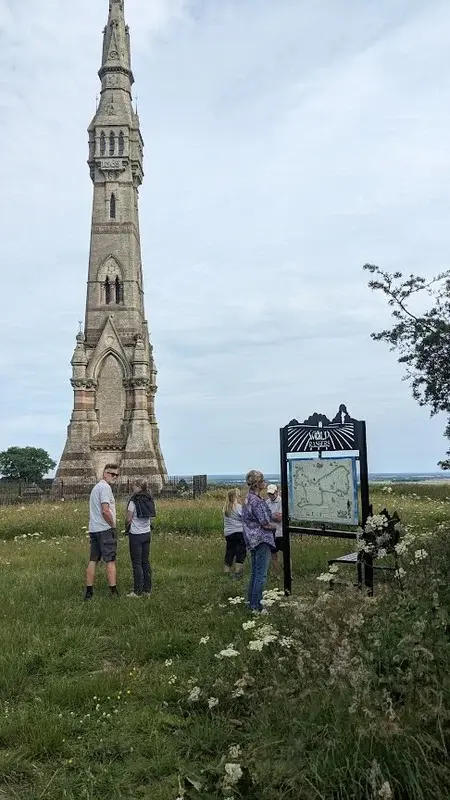
Locals enjoying the new seating and signage at the Sykes monument above Garton-on-the-Wolds
Looking forward Already to 2027
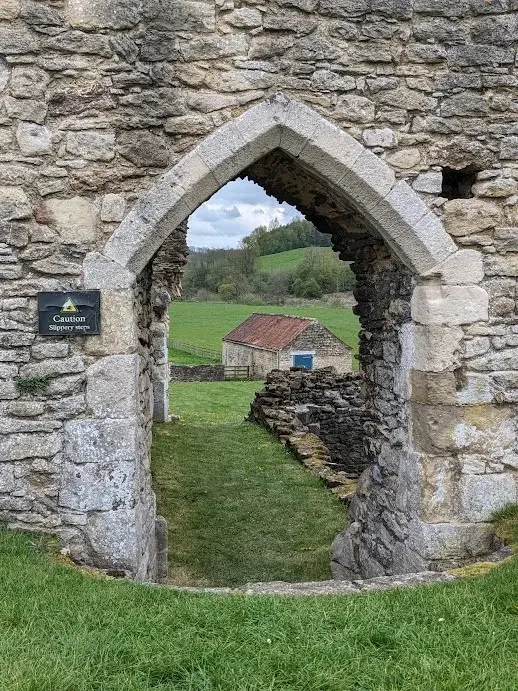
2027’s events are being planned. Here is an example which is as interesting as the great ruined monasteries of Rivaux and Fountains, but much closer to home - actually in the Wolds and free from the pressures of large visitor numbers. You will know of other places you have enjoyed. Let us know and we can add them to the list.
A Morning at the Racing Stables
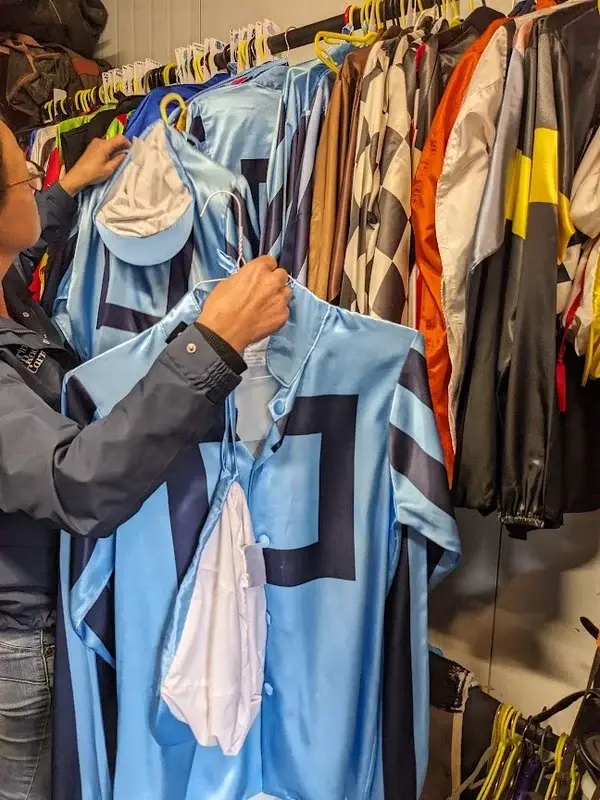
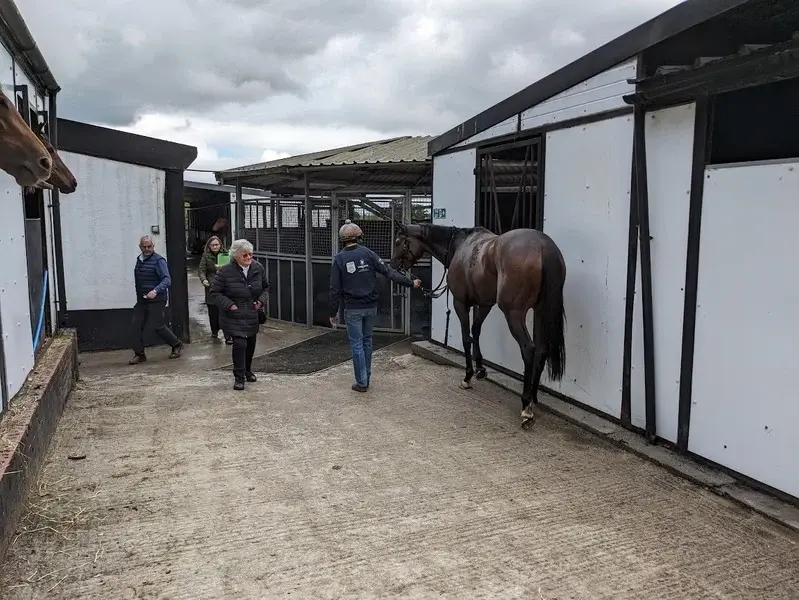
The visits that Margaret Cowell used to organise for the Trust and now by Susan Stephenson have always proved popular with our members and guests. They are often an opportunity to find out about the type of activities of people from other walks of life. They may seem as exotic as a foreign country and the visit to Brian Ellison’s racing stables at Norton with the anticipation of an early morning out on the training gallops had that feeling. Brian and his staff were marvellous hosts, encouraging us to go anywhere and ask anyone what and why things were done. Staff were busy getting on with their regular jobs like feeding, grooming, and mucking out, but were happy to stop and explain things . At the time of our visit there were over seventy horses in comfortable individual stables. All their details clearly set out on small information boards at the side of each stable door.
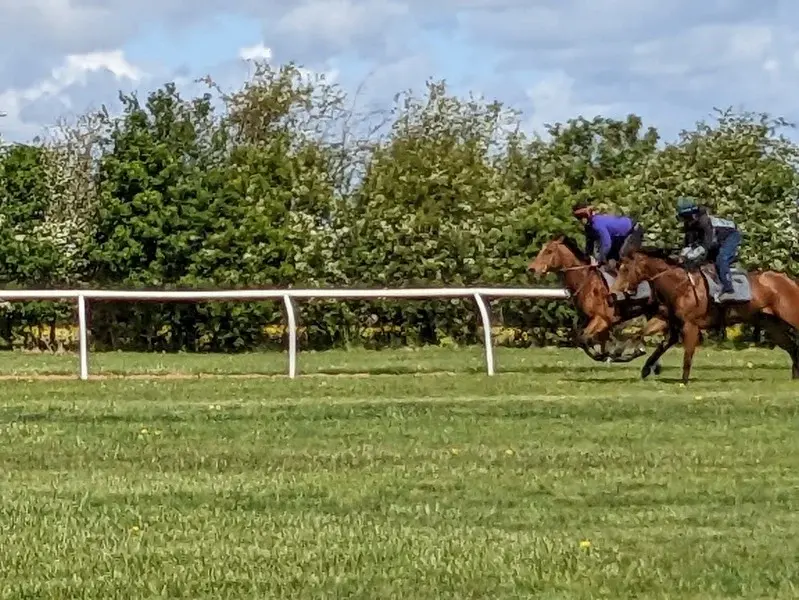
But standing at the top of Langton Wold and seeing a couple of riders unloading their horses fron a horsebox a mile away down the hill and, after a bit of preparation, mount and set off at a gallop to the top of the hill, barely touching the ground was spectacular - rider and horse flying.
---
Opinions expressed in these articles are those of the authors and may not necessarily exactly reflect the Trust’s consensus views. Readers’ comments will be gratefully accepted and considered for future inclusion.
